One view does not mean one account
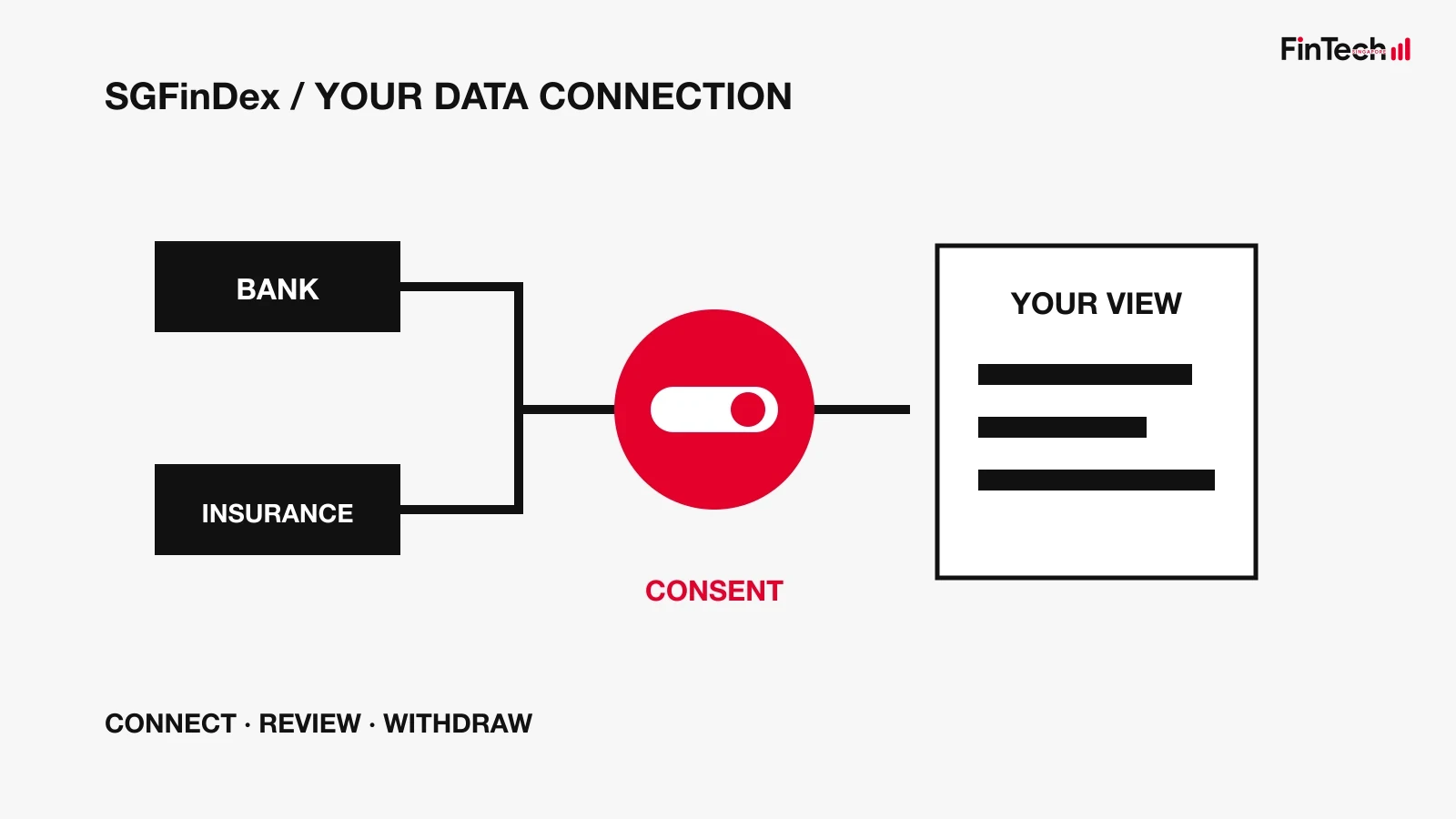
A financial-planning dashboard can bring information from several institutions into one place without moving the underlying money. SGFinDex supports that information flow, helping users review finances that would otherwise sit across separate services.
GovTech’s SGFinDex explainer describes authentication with Singpass and authorisation to connect participating institutions. Depending on the connections, users can bring together information relevant to savings, investments, CPF and insurance. The available coverage depends on the participating services and the data supplied.
Follow the information through the connection
There are several roles in the process: the institution supplying information, SGFinDex transmitting it and the service displaying it. Treating them as one database makes consent harder to understand.
GovTech states that SGFinDex does not read or store financial information and that data refresh requires consent. Users can withdraw their sharing consent. Those statements describe the exchange; they do not establish that a planning app deletes all information it previously received.
The receiving service has its own terms. For example, Great Eastern’s SGFinDex service terms set out conditions for its role. Read the terms of the service you actually use, including retention and withdrawal provisions, rather than applying one provider’s terms to another.
Check dates before acting on a dashboard
A combined financial view is useful only if you know what period each figure represents. A balance that has not been refreshed can be mistaken for money available now, especially when different institutions update on different cycles.
For a hypothetical household reviewing its finances, a dashboard could help reveal several small accounts that are easy to overlook. Before making a payment or investment decision, however, the household should verify the current balance and product details with the relevant institution.
The same discipline applies to insurance information: a summary helps locate a policy, but it is not a replacement for the policy contract or confirmation of a claim.
Give consent deliberately and review unused connections
Enter the service through its official app or website, read which information will be shared and check the identity of the receiving service before authorising. Singpass authentication should not be confused with a recommendation of every product shown afterwards.
If you stop using a planning service, review its connections and withdraw sharing consent where appropriate. Separately check how to close the service account or request deletion of retained information under its terms. These actions can have different effects.
A concise record of connected institutions and receiving apps makes later reviews easier. The benefit of aggregation is a clearer financial picture; keeping track of where that picture is available is part of using it well.