Identify what the balance represents
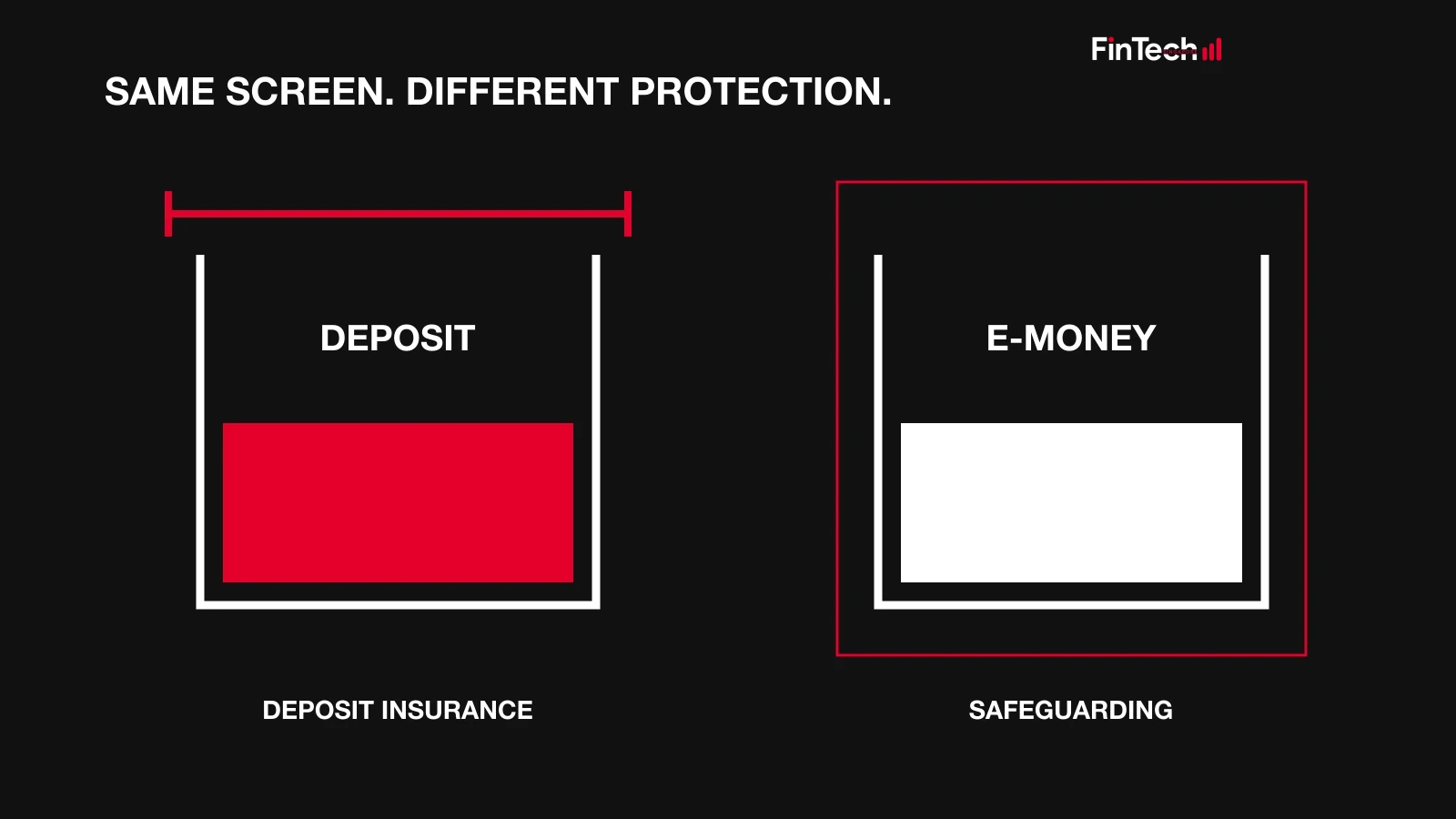
Two apps can show the same dollar amount while holding legally different products. One balance may be an eligible bank deposit; another may be prepaid e-money or an investment. The screen design and the presence of a payment card do not settle the question.
Begin with the account’s legal terms. Identify the provider, product and currency. Then check the protection statement attached to that product, rather than relying on the brand’s general description as a fintech or digital bank.
How deposit insurance is counted
The Singapore Deposit Insurance Corporation’s FAQs explain that eligible SGD savings, current and fixed deposits are covered at scheme members, with a general aggregate limit of S$100,000 for each depositor at each member. Multiple ordinary accounts at the same member do not each receive a separate S$100,000 limit.
For a simplified example, S$60,000 in an eligible savings account and S$50,000 in an eligible fixed deposit held by the same person at the same member total S$110,000. The standard aggregate limit would leave S$10,000 above that limit. Special account arrangements, including CPF-related, trust and joint accounts, require their applicable calculation rules.
SDIC excludes foreign-currency deposits, structured deposits and investments such as shares and unit trusts. Check membership and the product’s disclosure; being offered through a bank does not make every product an insured deposit.
What e-money safeguarding means for the comparison
MAS distinguishes prepaid e-money from bank deposits and states that e-money does not receive deposit insurance. Its explanation of e-money and deposits also says major payment institutions must safeguard their e-money float.
That is a different arrangement, so a provider’s reference to safeguarding should not be translated into a personal S$100,000 insurance promise. Ask how the particular product holds customer funds and what the terms say about recovery if the provider fails.
The practical issue is not whether an app looks bank-like. It is which legal claim you hold and which protection applies to it.
Keep access risk separate from investment risk
Deposit insurance addresses failure of a scheme member. It is not a general reimbursement promise for scams, investment losses or every payment dispute.
A useful personal record lists each balance, its legal provider, its product type and the relevant protection statement. This also exposes balances that are investments despite being presented alongside payment or savings features.
For everyday planning, consider how quickly you need the money and what would happen if one service became temporarily unavailable. That operational question remains useful even when the product’s legal protection is clear. The MAS licence-checking guide can help verify the entity before you examine the product terms.