Understand the portfolio behind the interface
A robo-adviser uses software to recommend or manage an investment portfolio. The app may make the process feel straightforward, but the economic outcome comes from the assets held, the fees charged and the risks taken.
MoneySense’s guide to robo-advisers describes portfolios commonly built from funds and automated rebalancing to maintain a target allocation. The starting questionnaire helps establish a profile; it is not a promise that the resulting portfolio cannot fall in value.
Build a complete cost comparison
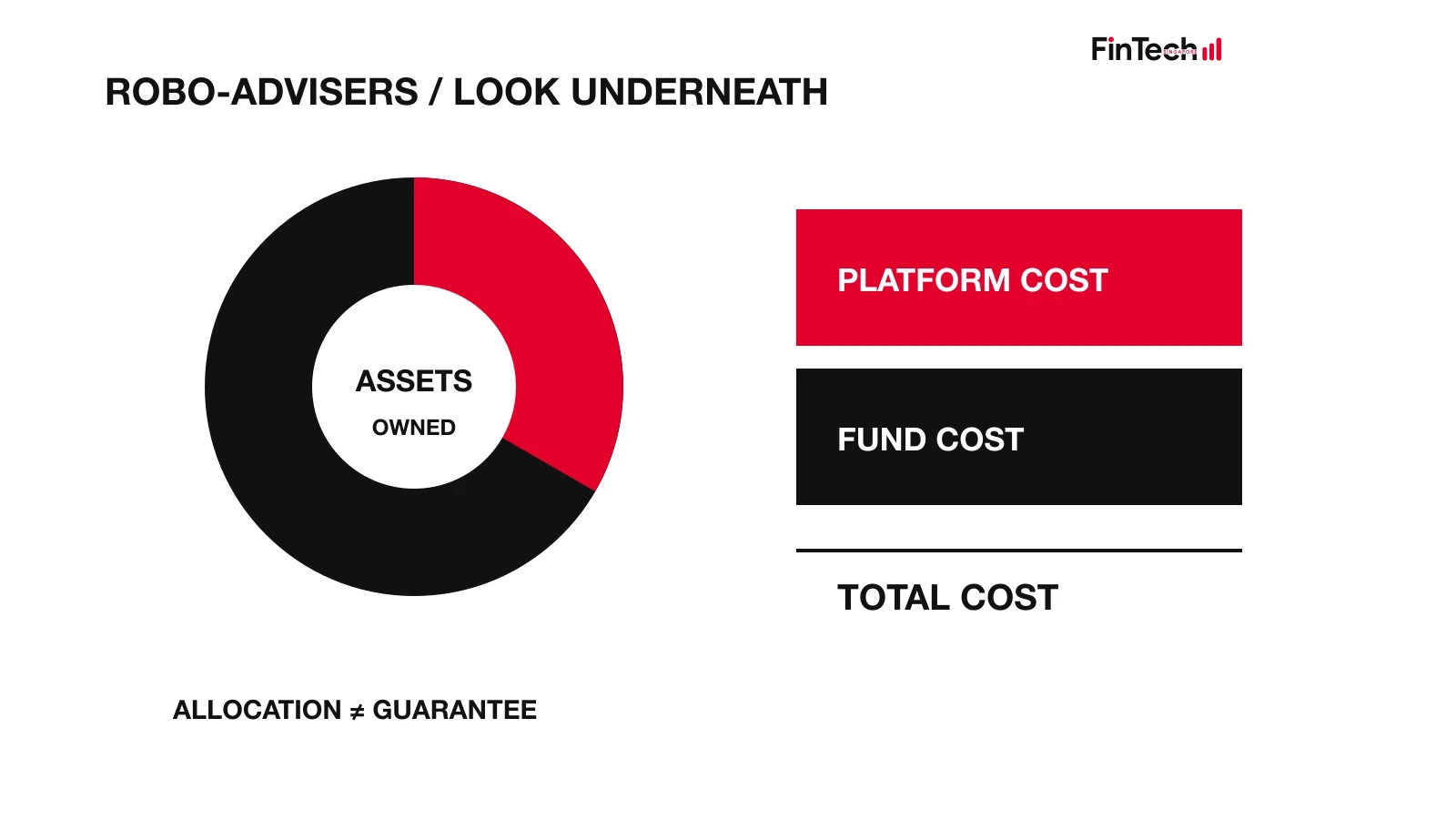
Look beyond the advertised platform fee. Underlying funds have their own costs, commonly expressed through a total expense ratio. A weighted average reflects how much of the portfolio sits in each fund. Also check any currency-conversion, transaction or withdrawal charges relevant to the service.
In a simplified illustration, a constant S$10,000 balance with a 0.5% annual platform charge and 0.2% weighted fund cost implies roughly S$70 a year for those two layers. This is not a quotation from any provider. It ignores changing balances, returns and any other charges.
If two services quote different fee structures, compare them using the same assumed portfolio value and investment mix. A temporary promotion should be separated from the ongoing cost after the promotion ends.
Ask where the assets are held
Before funding an account, identify the contracting entity and ask who holds the investments and uninvested cash. Read how ownership is recorded, what statements you receive and what the withdrawal or transfer process involves.
Custody arrangements address where assets are held and administered. They do not determine whether the assets rise or fall in price. Nor should a reference to separate custody be read as a guarantee of instant access during every operational disruption.
The MAS licence-checking process is a useful first step. Follow it with the actual account and custody terms, rather than assuming all platforms use the same structure.
Test the risk description against a real need
A long-term goal and an imminent expense require different planning. Ask whether you could leave the money invested after a substantial market fall, and whether you have other funds for expenses that cannot wait.
Automation can rebalance a portfolio, but it cannot change your need to pay a bill. A withdrawal may require investments to be sold and proceeds to settle. Check the expected process before relying on the account for a fixed near-term payment.
Finally, distinguish investment holdings from eligible insured deposits. A regulated provider, a familiar app and an automated process do not remove market risk. Choose only after understanding what is owned, what it costs and how it can be accessed.