A consultation, not a final rule
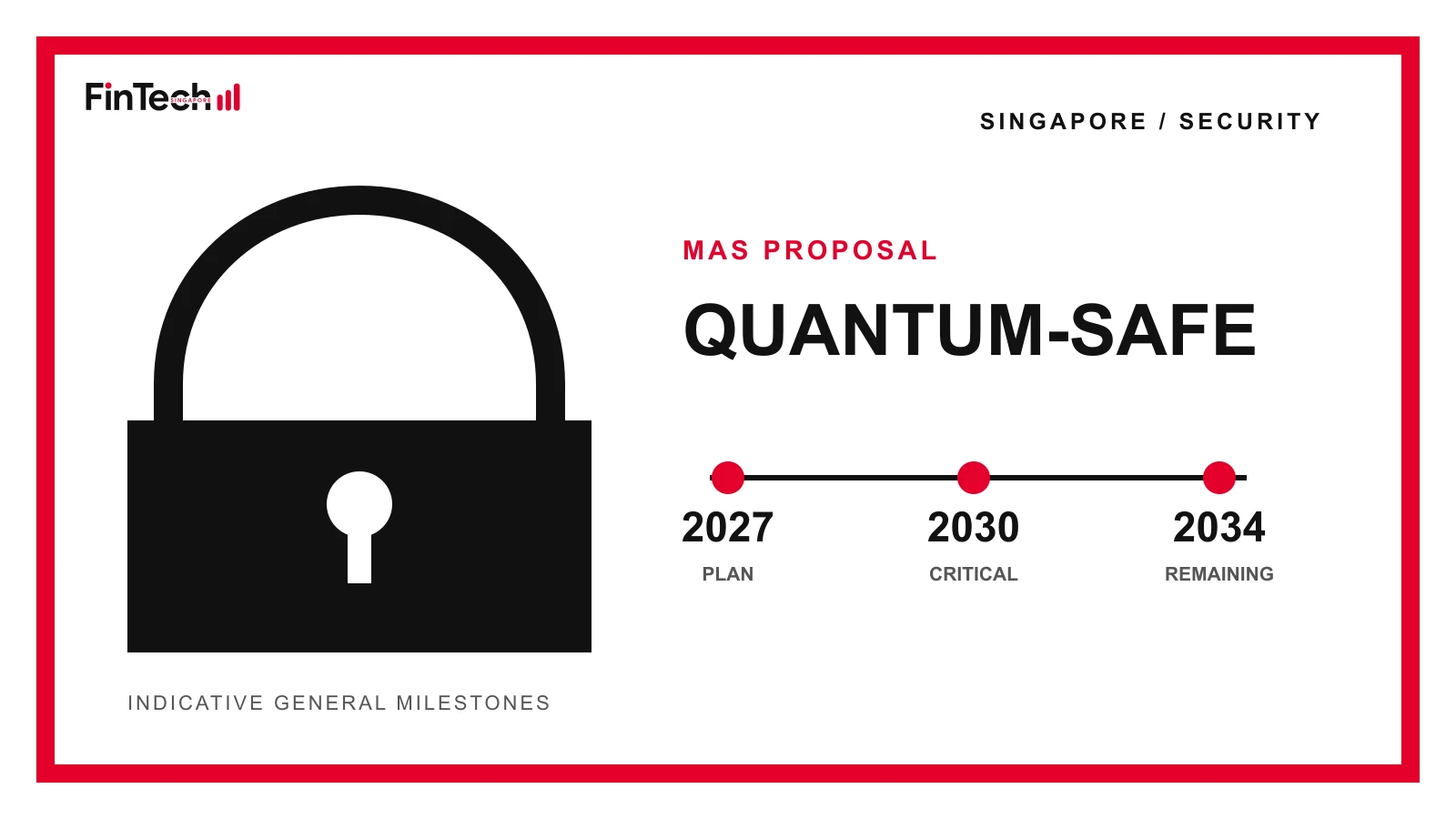
Singapore's financial institutions may need to map the encryption used across their systems and plan a staged move to quantum-safe technology under a Monetary Authority of Singapore consultation. The proposal sets out indicative milestones for migration of critical systems by the end of 2030 and remaining systems by the end of 2034.
MAS published the consultation on 6 November and is seeking comments by 23 November 2026. The proposed circular describes supervisory expectations; MAS says it is not intended to impose legally binding obligations. The dates are proposals, not final rules or a guarantee of when a quantum computer will threaten current encryption.
For a bank, payment operator or fintech working with a financial institution, the immediate question is practical: where is cryptography used, which systems and suppliers depend on it, and how can a replacement be tested without disrupting payments or access?
What MAS wants firms to prepare
The proposed guidance calls for board or senior-management ownership, an inventory of cryptographic assets and a risk-based migration plan. Firms would identify the algorithms, key lengths and protocols in use, the systems they support and related dependencies. Critical or internet-facing assets and data kept for long periods would receive priority.
MAS also proposes that migration plans address procurement, staff capabilities and third-party roadmaps. New systems should support quantum-safe algorithms or be capable of being upgraded within the applicable indicative timeframe. Testing should consider performance and compatibility, with phased deployment and interim controls for systems that cannot yet migrate.
This is relevant to payment infrastructure because a service can depend on cryptography in several places, including application connections, authentication, cloud services and external providers. Mapping those dependencies is a preparation step, not evidence that a particular provider's service is vulnerable or that every part must be replaced immediately.
The proposed dates are not all the same
For financial institutions generally, MAS proposes a plan by 31 December 2027, migration of critical systems by 31 December 2030 and migration of remaining systems by 31 December 2034. Where technical or operational impediments prevent a firm from meeting an indicative timeline, it should document the reasons and apply interim controls.
A separate, earlier proposed milestone applies to critical information infrastructure owners, domestic systemically important banks and NETS: they should submit a migration plan to MAS by 30 June 2027. Critical information infrastructure owners should complete migration of their CII systems by 31 December 2029. The 2029 CII milestone should not be treated as applying to every system or every institution.
MAS says the timelines may change as technology, standards and regulatory expectations evolve. Its consultation asks whether the expectations and proposed timelines are appropriate.
Why start before the threat is certain?
A sufficiently capable future quantum computer could break some widely used public-key cryptographic algorithms, including RSA and elliptic-curve cryptography, according to MAS. There is no internationally agreed date for when such a machine could emerge.
Singapore's Cyber Security Agency has warned that attackers may collect encrypted information now in the hope of decrypting it later. Its quantum-safe handbook and readiness index offer organisations tools for assessing exposure and planning the transition. Neither the MAS consultation nor the existence of these tools means that an individual consumer must change banking apps today.
In a separate development, Visa says one of its new Singapore capability hubs will research quantum computing for finance. That company initiative is separate from the MAS consultation.