First establish whether the case falls within scope
Singapore’s Shared Responsibility Framework, effective from 16 December 2024, covers specified phishing situations involving unauthorised transactions from protected accounts. It is an existing framework, not a new September 2026 reimbursement scheme.
The operative MAS and IMDA guidelines focus on impersonation that leads a user to enter account credentials on a fabricated digital platform, followed by transactions the user did not authorise. A payment that someone knowingly initiates to a scammer is a different scenario. Singapore-issued credit, charge and debit card transactions are outside this framework’s responsibility-sharing rules.
Protected-account conditions also apply. The fact that a loss involved a phone, an SMS or a bank account is not enough on its own to establish coverage.
Responsibility follows duties, not an equal split
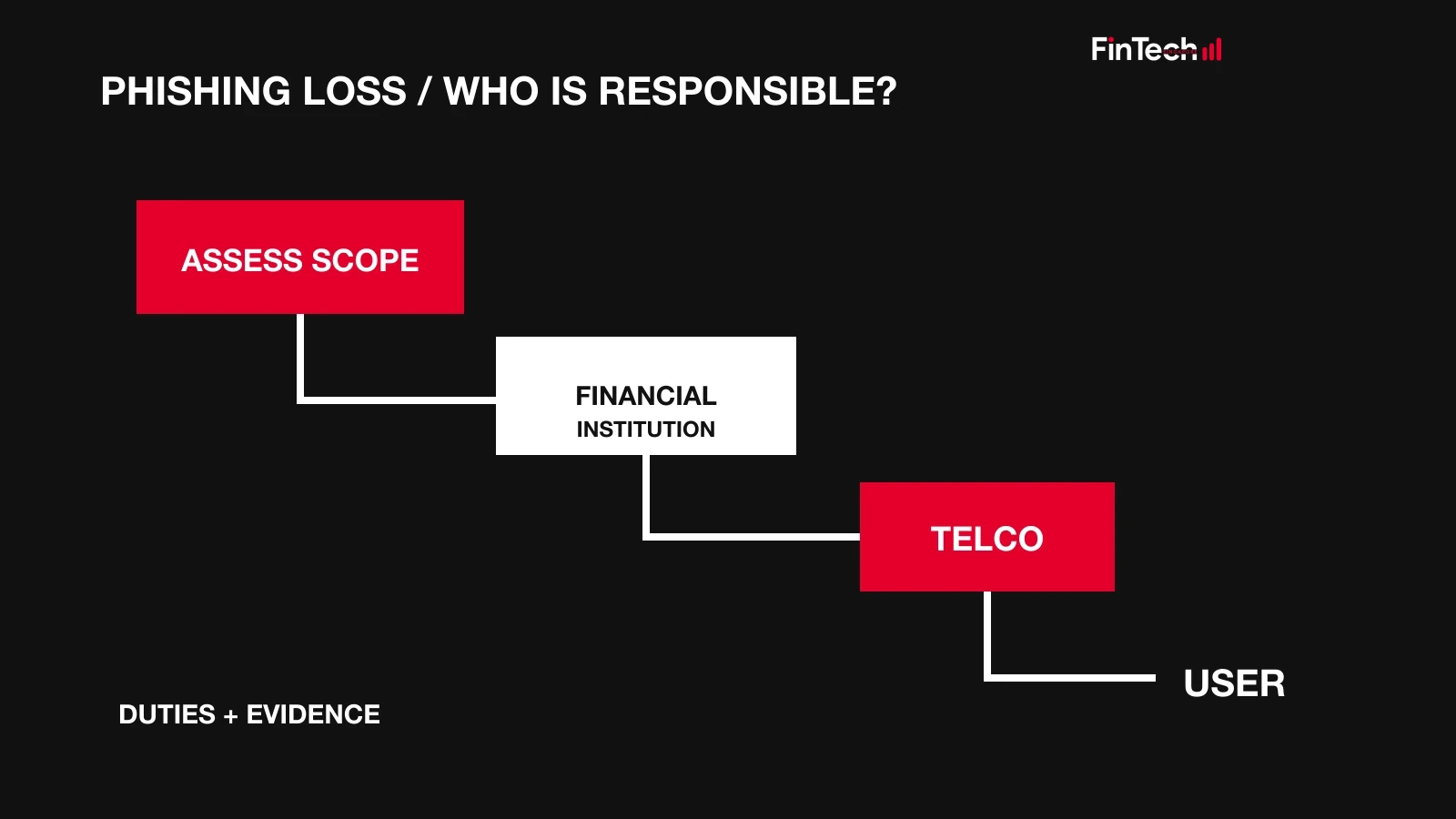
The official SRF workflow sets out a sequence. A relevant financial-institution breach leading to the loss places responsibility with that institution. Where it fulfilled its duties, a relevant telco breach in an SMS case may place responsibility with the telco. If neither relevant duty was breached, the consumer can bear the loss.
The word “shared” therefore does not mean that a bank, telco and customer each automatically pay one-third. The investigation has to connect the facts to the duties and the resulting loss.
The practical question for a claimant is what the institution assessed and why. Ask for a written explanation that separates the scope decision from the assessment of responsibility.
Preserve evidence while stopping further access
Contact the financial institution through its official emergency channel as soon as you notice suspicious activity, and use its available account-blocking features where appropriate. Do not continue the conversation with the suspected scammer to collect more evidence.
Keep the messages you already have, sender information, dates, links, transaction references and notifications. Prepare a clear timeline distinguishing what you entered, what you approved and what appeared without your authorisation. A concise factual account is more useful than trying to decide the legal outcome yourself.
The guidelines require prompt reporting, generally no later than 30 calendar days after the institution’s notification alert, and supporting information within three calendar days of reporting the transaction to the institution. Follow its reporting instructions immediately rather than treating these limits as time to wait.
An outcome can be questioned
The financial institution is the overall point of contact under the workflow. It assesses scope and involves the telco where applicable. Claims outside the framework should proceed through the institution’s existing investigation and dispute process.
If you disagree with the result, the official workflow identifies further avenues including FIDReC for financial disputes and IMDA for the relevant telco issue. Keep the written outcome and supporting records for any escalation; eligibility and procedure depend on the channel.
This is a guide to organising the questions and evidence. Whether a particular loss qualifies depends on the actual account, transaction and investigation findings.