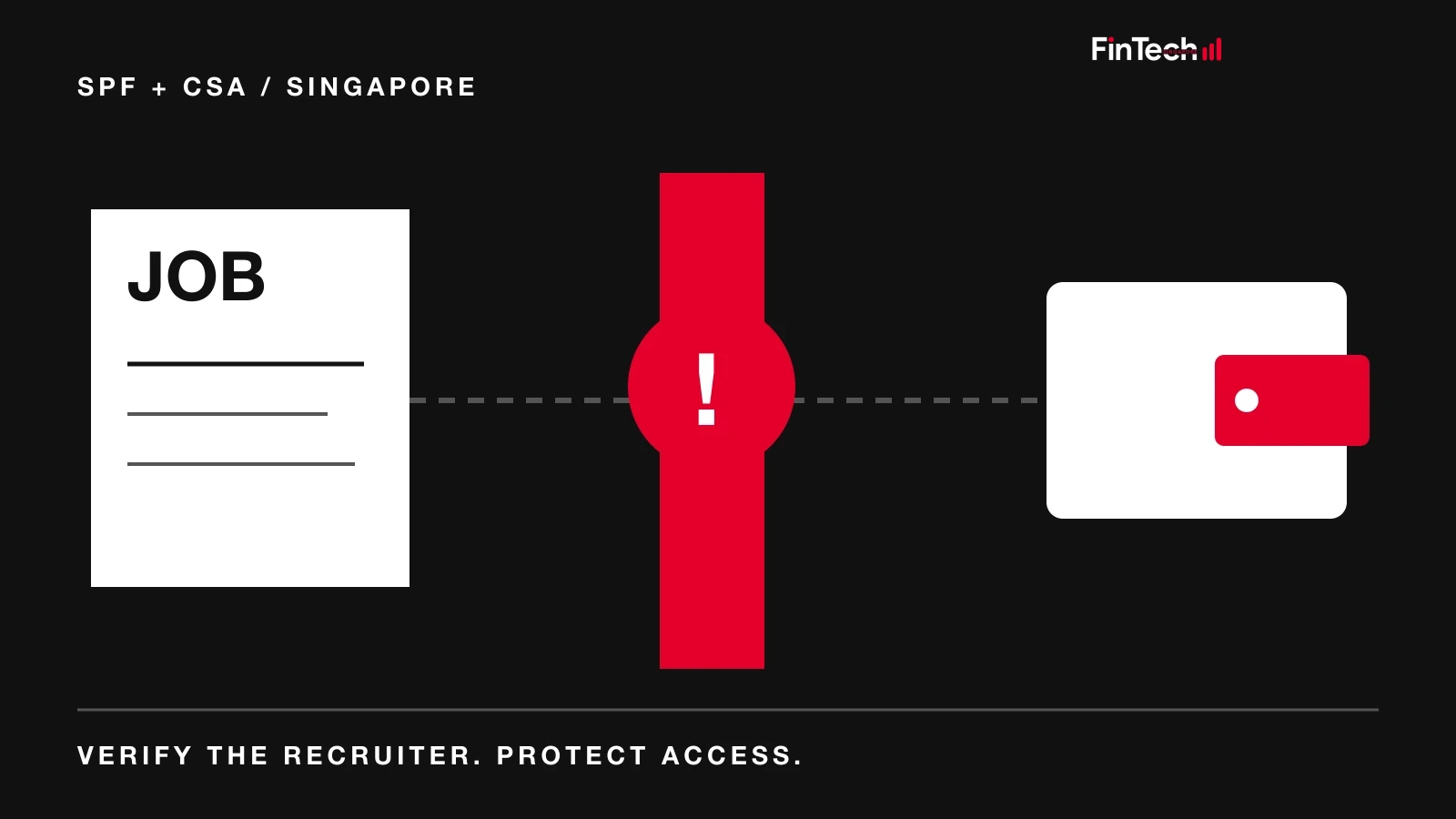
The interview became a route into company systems
Singapore’s police and Cyber Security Agency issued a warning on 14 August after a cryptocurrency-related scam caused US$11.8 million in losses, approximately S$15 million.
The joint advisory describes a victim approached on LinkedIn by someone posing as a recruiter. After interviews, a supposed coding assessment led the victim to download malicious software on a company device. The attacker obtained internal credentials and used them to transfer cryptocurrency.
The SPF–CSA advisory is directed at both individuals and businesses. It does not name the affected company in the published case.
Why this is a business-control problem
The case shows a path from a personal job search into corporate access. A convincing conversation outside work can become a business incident when the next step takes place on a device or account with organisational privileges.
This is not evidence that every remote interview or coding test is malicious. It is a reason to treat unfamiliar files and requested software installations as a separate security decision, even after a plausible recruitment conversation.
The monetary loss also makes the distinction between an account login and authority to move funds important. Protecting one entry point is not the same as limiting what a compromised session can do.
The controls identified by the agencies
The agencies advise verifying recruiters independently, avoiding untrusted code, restricting access to internal credentials and enforcing transaction approvals. They warn that stolen session tokens can bypass multi-factor authentication.
The detailed joint advisory also calls for prompt isolation of suspected compromised systems, session revocation, credential resets and notification of internal security teams.
For a fintech team, a useful review is to trace the same route defensively: which work devices can access sensitive systems, which credentials are exposed to them, and where an independent approval stops an unauthorised transfer.
That review should not be reduced to telling employees to be more careful. Clear rules for recruitment assessments and a workable escalation route need to be backed by technical limits on what any one compromised device can reach.