Why the experiment matters
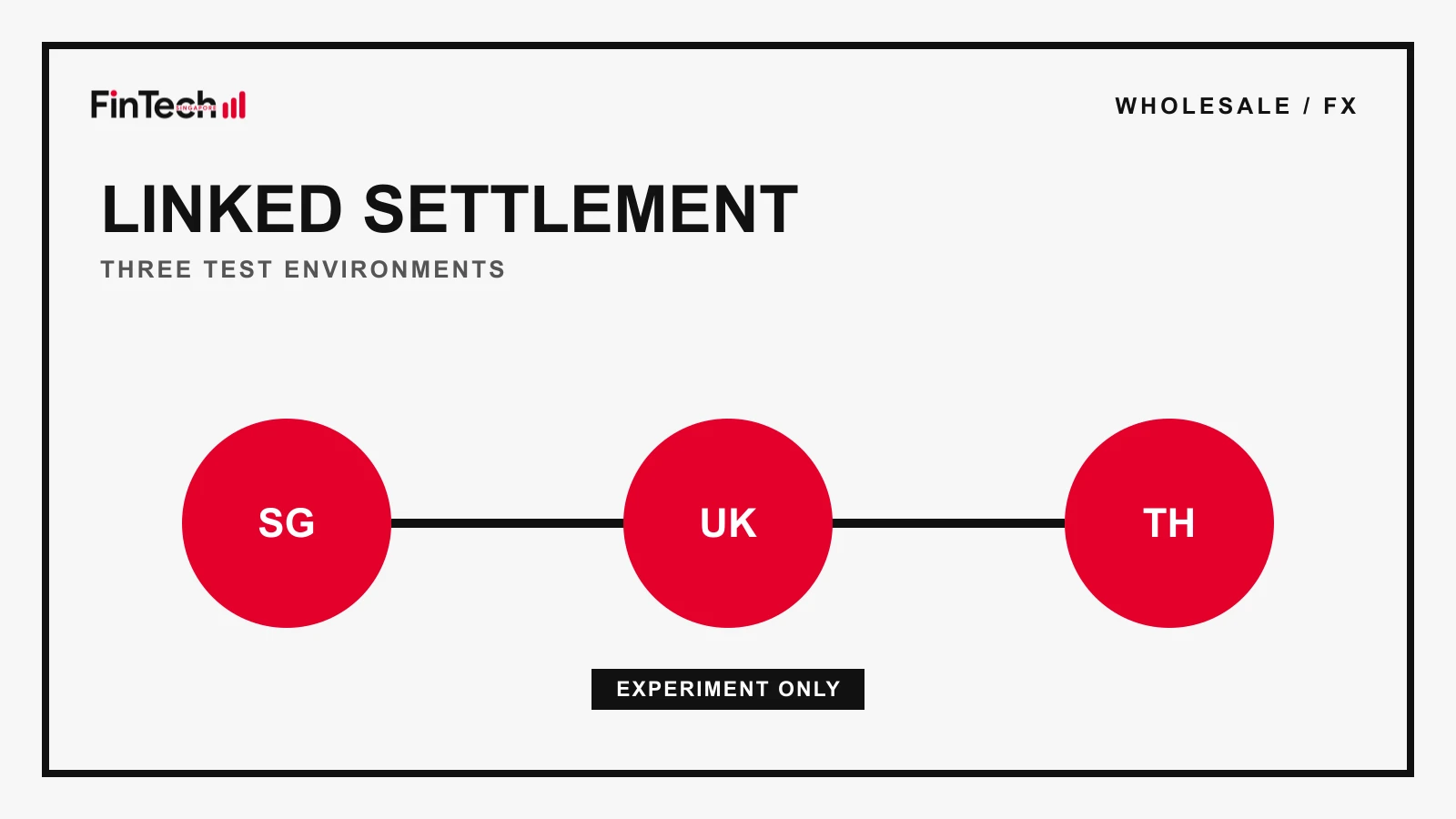
A Singapore dollar test environment has taken part in an experiment to coordinate foreign-exchange settlement across three different central bank systems. The Monetary Authority of Singapore (MAS), Bank of England and Bank of Thailand say Project Meridian FX APAC demonstrated the approach in test conditions; it is not a new service for bank customers.
The results, published on 13 November, address a basic risk in currency trading: one party may deliver a currency before receiving the other. The experiment tested whether transfers on separate settlement systems could be coordinated so linked payments proceed together. Partior developed and integrated the prototype coordination service with the participating central banks.
Three different systems, one test
The project used a Bank of England simulation of an account-based real-time gross settlement system, the Bank of Thailand's Project SAN prototype and a non-production configuration of Singapore's SGD Testnet. The systems had different technical architectures and ways to receive instructions and report transaction status.
The prototype, called a synchronisation operator, coordinated payment-versus-payment settlement: a linked foreign-exchange transaction is designed to proceed only when the required payment legs are ready. The central banks also tested multilateral net settlement, where eligible transactions are offset before settlement. This could reduce the liquidity participants need to provide, but the report does not establish savings in a live market.
The system-specific differences mattered. In the Singapore test, the operator managed a dedicated escrow arrangement to replicate the reservation of funds. The executive summary says that arrangement reflected the test environment and is not an inherent feature of synchronisation or a proposed model for a future operator.
What was not tested
The experiment did not reproduce the full foreign-exchange trade lifecycle, live participants or production operating conditions. The teams tested selected exceptions such as insufficient funds, invalid account identifiers and temporary outages. Important conditions still to be tested include non-overlapping operating hours, expiry of reserved funds and prolonged outages.
The technical report distinguishes the stages of a failed transaction. Before commitment, reservations can be cancelled without settling a leg; after commitment, the workflow retries outstanding instructions. Its policy report says a technically coordinated outcome alone does not establish a common, legally recognised point of settlement finality across jurisdictions.
These qualifications matter for a Singapore bank or infrastructure provider assessing the work. Any production arrangement would need clear rules for access, responsibilities, operational recovery, data sharing and legal finality as well as working connections between systems. The reports examine options; they do not announce a regulation or approved operator.
A UK plan, not a Singapore launch date
The Bank of England plans to launch a live synchronisation interface in 2028. The project summary explicitly says participation does not imply an equivalent implementation commitment or policy direction by MAS or the Bank of Thailand.
For now, Meridian FX APAC is evidence about how different wholesale settlement designs can be connected in an experiment. It does not promise cheaper or faster retail remittances, and it does not establish that Singapore customers can make payments through the prototype.
The experiment is separate from Singapore Payments Network’s planned role in governing national payment schemes.