A workforce commitment with operational consequences
Singapore's financial sector is turning AI training into a workforce-wide programme. On 24 September, Deputy Prime Minister Gan Kim Yong launched the Institute of Banking and Finance's AI Workforce Co-Lab with 23 pioneer institutions across banking, insurance and asset management. The institutions have committed to train their Singapore workforces, totalling more than 80,000 employees, in critical AI skills by 2028 through IBF-recognised programmes.
The commitment is not limited to technology teams. In his keynote at the IBF Distinction Evening, Gan identified customer service, financial advisory, credit underwriting, fraud detection, market analysis and software development as areas already being changed by AI. More than half of the participating employees have already received training, according to the speech.
A loan assessment is more than a model score
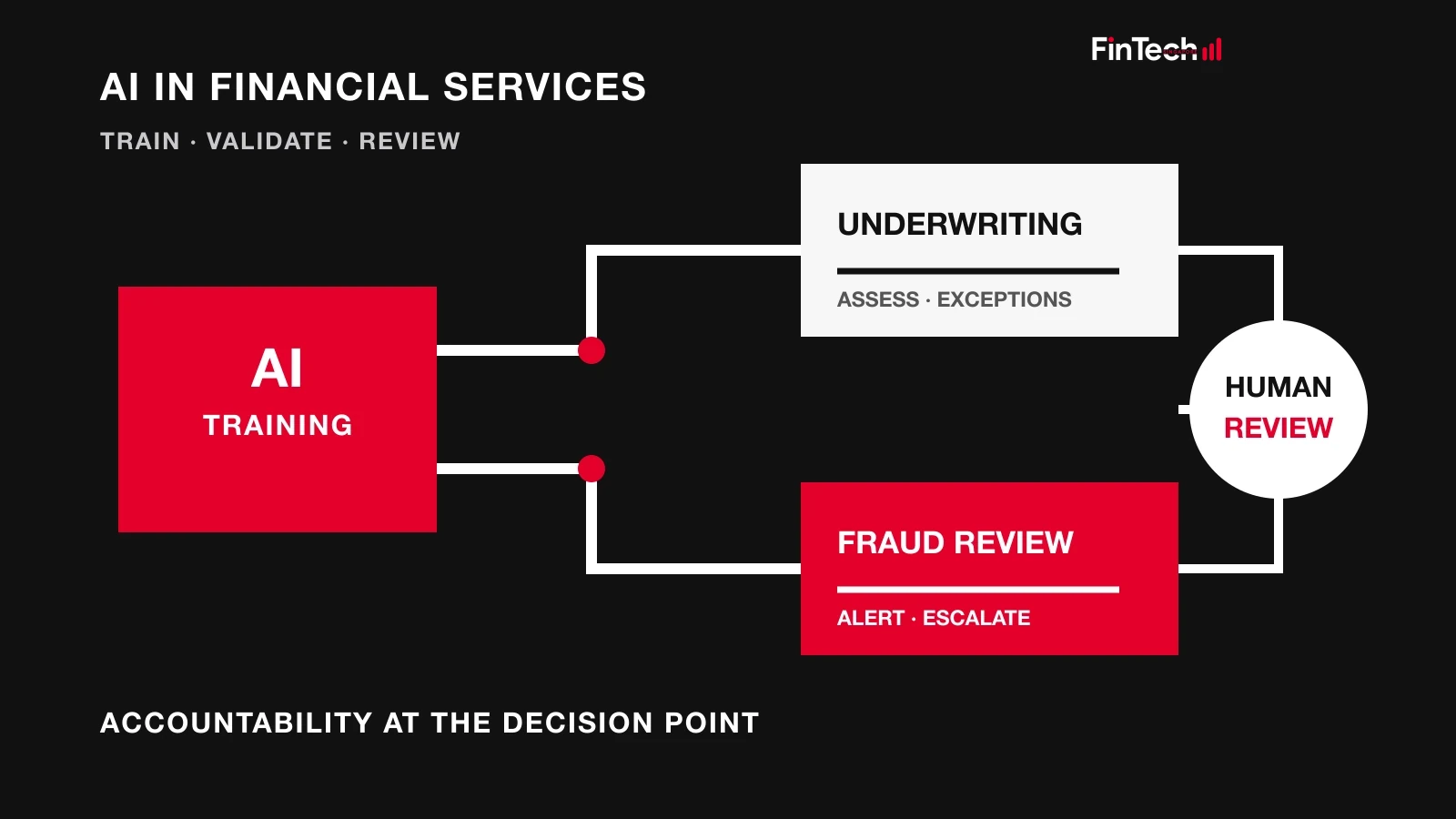
AI can help organise information, identify patterns or flag cases for closer attention. In a personal-loan setting, that could support work around document review, affordability checks or the prioritisation of applications. It does not turn a model output into a complete credit decision by itself.
A sound process needs to establish what information was used, what the output means, who may approve an exception and how an incorrect or incomplete result is corrected. A borrower should not be left trying to resolve a consequential decision through an opaque automated channel. These are practical control questions, not evidence that every Singapore lender uses the same system or workflow.
MAS' FEAT principles for AI and data analytics describe fairness, ethics, accountability and transparency as foundations for responsible use in the financial sector. They provide a useful frame for training: staff need enough understanding to recognise when a result requires checking, escalation or explanation.
Fraud detection has a false-positive problem too
Fraud controls must find activity that deserves intervention without routinely blocking legitimate customers. An AI-assisted alert can help staff concentrate on unusual transactions, but a weak alert process can also delay an urgent payment, inconvenience a customer or send an investigation down the wrong path.
The practical questions are therefore concrete: which alerts need human review, what evidence is recorded, how quickly can an error be reversed, and who is responsible for improving the control when scam tactics change? MAS has separately outlined cyber risks associated with generative AI and mitigation measures that financial institutions can consider. Its 2024 information paper is an awareness resource, rather than a confirmation of a particular bank's fraud-detection design.
The new roles are about judgement as well as tools
The Co-Lab is designed to examine how jobs change and to test practical approaches to training and job redesign. Its operations pathway specifically points to process improvement, exception handling, risk oversight and validating AI output. That matters because financial-services work often includes decisions that affect access to money, the handling of suspected fraud, or advice given to a customer.
IBF's Co-Lab information also describes role pathways such as augmented KYC officers and scam-support specialists. The programme is a workforce initiative, not a declaration that an AI tool should make these decisions without a person.
What institutions should be able to show
Training is useful when it changes the quality of decisions made around a system. For AI that informs lending or fraud action, institutions should be able to identify the intended use, limits on use, accountable owner, review and escalation route, monitoring approach and customer-redress path. The level of control should reflect the potential harm if a result is wrong.
The next useful evidence from the Co-Lab will be the practical findings it shares with the sector: which roles are being redesigned, what skills staff need to validate or challenge AI output, and how employers measure whether the new controls help customers as well as operations. The 80,000-worker target is significant; the quality of those safeguards will determine how meaningful it becomes.