Less capital, fewer transactions
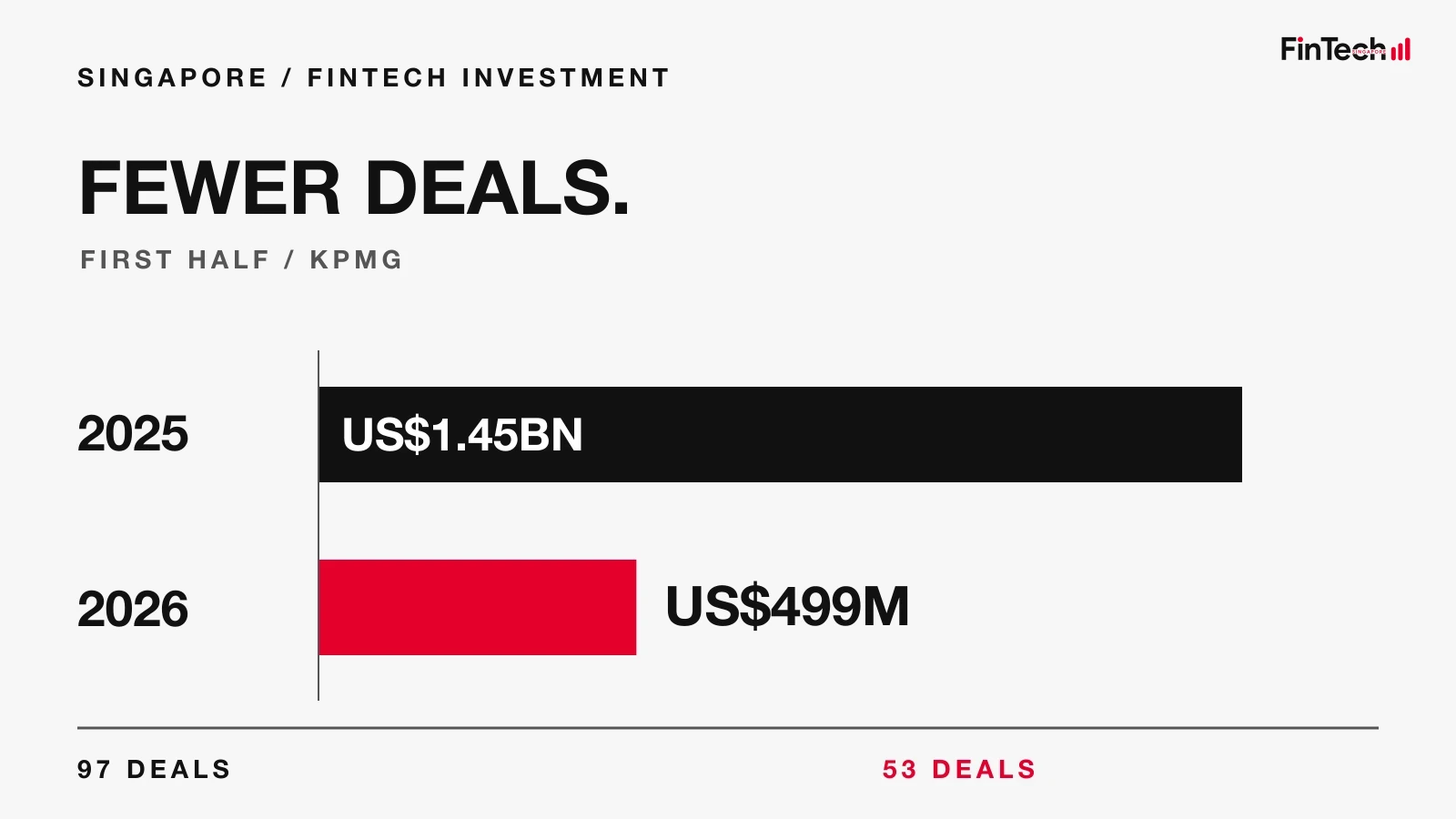
Singapore fintech investment totalled US$499 million across 53 deals in the first half of 2026, according to KPMG’s report released on 27 August. The comparable period a year earlier recorded US$1.45 billion across 97 deals.
The figures describe both a decline in aggregate capital and a smaller number of completed transactions. They do not, on their own, show the financial condition of every fintech operating in Singapore.
A rebound with a concentration caveat
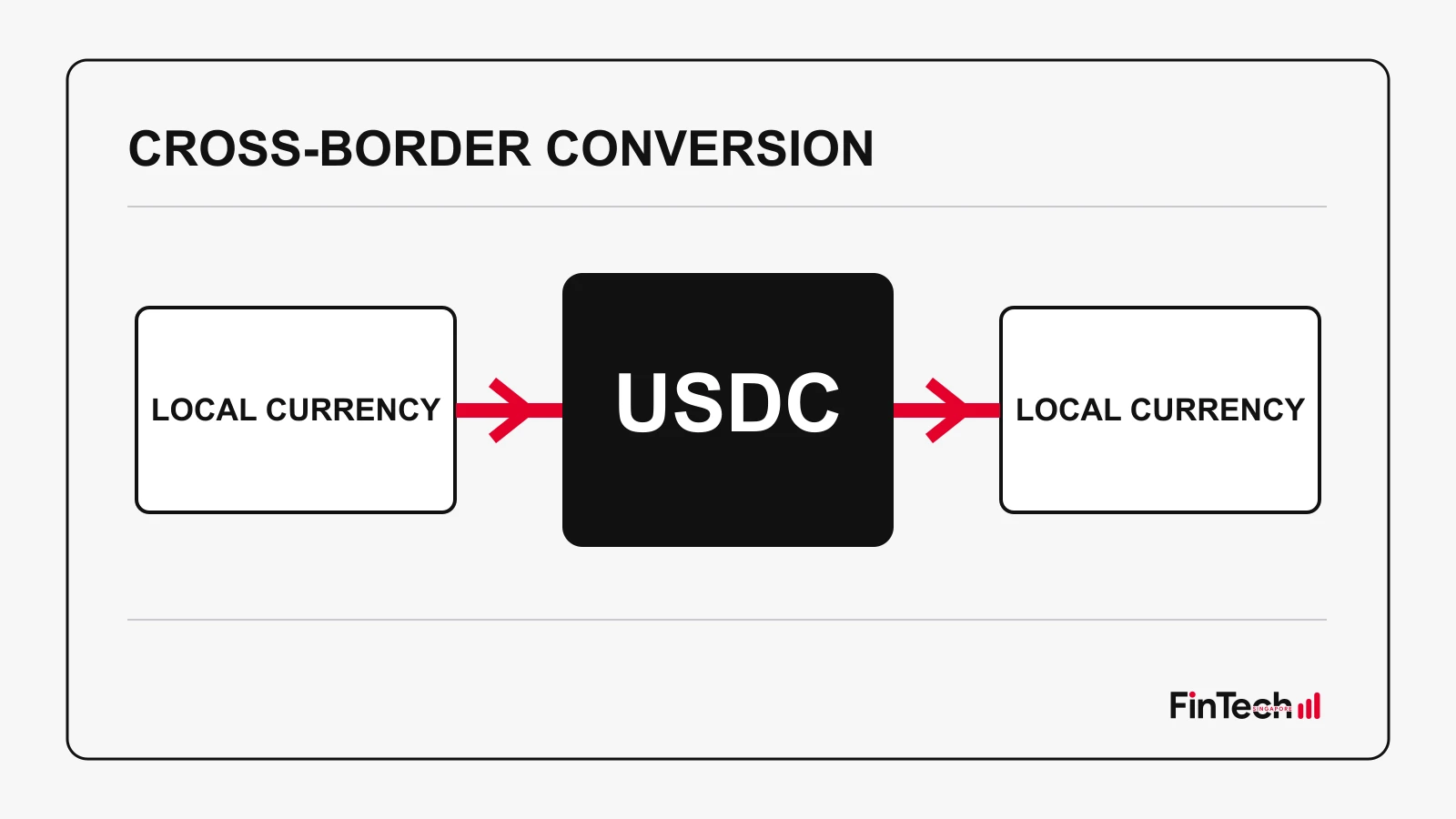
KPMG’s Singapore findings put first-quarter investment at US$88 million and second-quarter investment at US$411 million. A US$320 million cross-border payments round accounted for much of the second-quarter total.
Payments attracted US$332 million across three deals. KPMG also identifies digital assets and AI among the areas attracting investment. Those classifications can overlap and should not be added together as though they were mutually exclusive slices of the market.
The concentration matters when interpreting a rebound. If a single large transaction drives most of the change, a higher quarterly total is not enough to establish that fundraising became easier for the typical company.
What founders and readers can take from the figures
The clearest conclusion is narrower than either a boom or a collapse narrative: the recorded market is smaller than a year earlier, and its aggregate value is sensitive to a few large deals.
An early-stage founder and a mature payments business may face very different financing conditions. The headline total cannot tell us which companies received term sheets, how long negotiations took or what valuations investors accepted.
Likewise, investment is not the same as operating revenue. A funding slowdown does not directly measure consumer adoption or payment activity, although it can affect how companies finance expansion.
A broad recovery would need evidence beyond another large round lifting the total. Deal count, the range of companies receiving capital and the distribution of investment would give a fuller picture than aggregate value alone.