What the 2026 estimate says
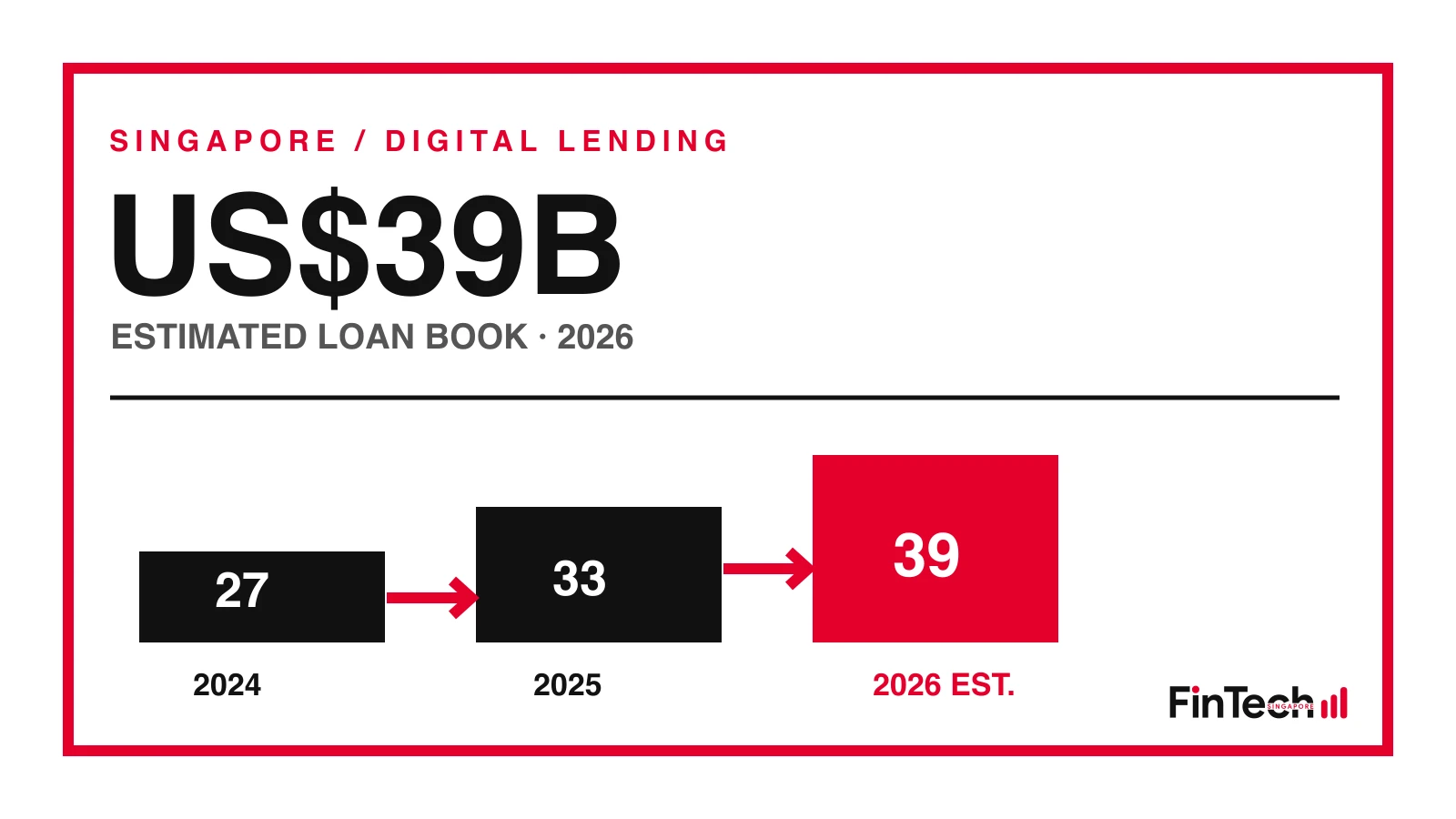
Singapore's digital lending loan book is estimated to reach US$39 billion in 2026, up from US$33 billion in 2025, in the Singapore country report of Google, Temasek and Bain's e-Conomy SEA 2026 study. The report, released on 21 October, also estimates US$166 billion in digital payment transaction value and US$0.60 billion in digital insurance premiums for 2026.
The lending estimate represents 18% growth from the previous year. The report puts payments growth at 7% and insurance premium growth at 12%. That makes digital lending the fastest-growing of the three Singapore financial-services measures in this year's estimates, though the categories count different things.
Why the totals cannot be compared directly
The report defines the lending number as the year-end balance of digital consumer loans, excluding credit cards and mortgages, plus digital small and medium-sized enterprise loans. It defines the payments number as the gross value of transactions across cards, account-to-account transfers and e-wallets. Insurance uses annual premium equivalent for life and related health policies, and gross written premium for non-life cover.
A loan balance outstanding at year end is not the same as the value of loans issued during the year. Likewise, payment transaction value is not bank or payment-provider income. The US$39 billion and US$166 billion figures should therefore not be read as competing market sizes or as revenue available to fintech firms.
The lending category also covers more than Singapore's digital banks. The report does not identify how much of the estimated balance belongs to any lender, how much is new credit, or whether loan performance has improved. Those questions need lender disclosures or supervisory data rather than an aggregate forecast.
What to watch beyond 2026
The authors project Singapore's digital lending balance will reach US$66 billion in 2030 and US$92 billion in 2035. Those are modelling outcomes, not committed lending capacity or a forecast for a particular bank. They imply continued growth but say little on their own about borrower outcomes, funding costs or credit losses.
For readers assessing the sector, the useful signal is the estimated pace of digital credit growth. Whether that growth proves durable will depend on the quality of the loans and the evidence lenders publish as their portfolios mature.
Summary
The e-Conomy SEA report estimates 18% growth in Singapore's digital loan book to US$39 billion in 2026. It is a year-end loan balance covering specified consumer and SME lending, not new lending, revenue or digital-bank market share. The 2030 and 2035 figures remain projections.